
Why Street Style? Why Snowboarding Pants? Why Camo?
My Nani took me to the thrift store when I was 14. Ever since then, I have been obsessed with upcycling and making clothes. My biggest supporter in clothes-making is my mom. She gifted me a sewing machine which allowed me to sew my own skirts, shirts, bags, bathing suits, and more. Because of this background, I knew right away that I wanted to make clothing for my final project.
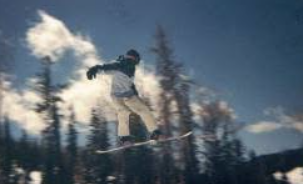
At the age of three, my mom took me snowboarding (she’s in the featured image for this post). I absolutely hated it. I hated the cold, I hated falling, and most of all I hated the bulky clothes I had to wear to stay warm. It wasn’t until I was 13 when I gave snowboarding another chance. That time, I actually made it down the runs without wiping out constantly. I started to enjoy it. My passion for snowboarding really blossomed once I was a freshman at CU Boulder. I started hitting the park and gaining confidence. That’s when I noticed something else: my friends were all wearing super baggy pants.
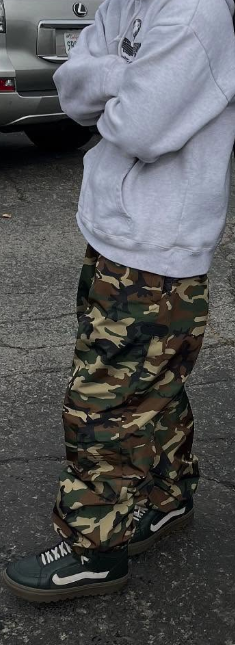
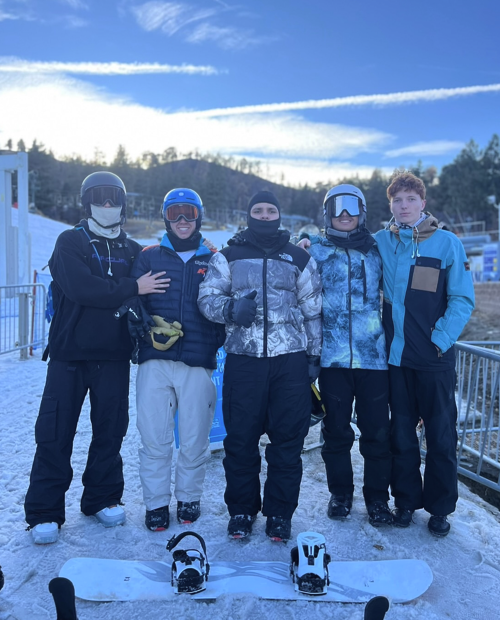
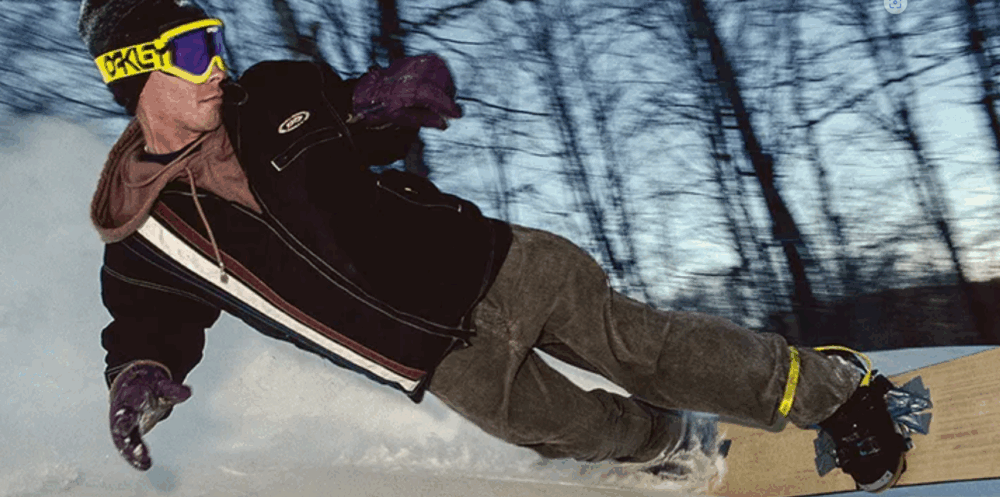
When I thought about what I wanted to make, I kept coming back to those pants. Baggy, camo snowboarding pants. They weren’t just about staying warm they were about style and movement. I looked at my friends and at pro riders (Figure 2) and tried to imagine what I’d want my own version of those pants to look like.
Inspirations
My inspirations came from three main places: my friends, professional snowboarders, and the bigger snowboarding culture around clothes.
The first and most obvious source of inspiration was my friends. They all wore oversized pants in the park. Some were plain, some had bold patterns, and the camo ones really stood out. The baggy silhouette gave them freedom of movement, but also a certain style on the slopes. It made me want to design something similar—pants that looked cool while also being practical.
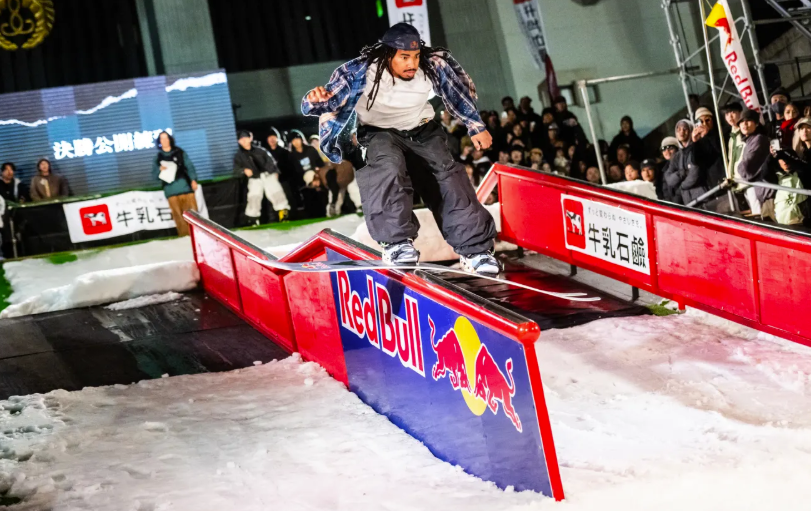
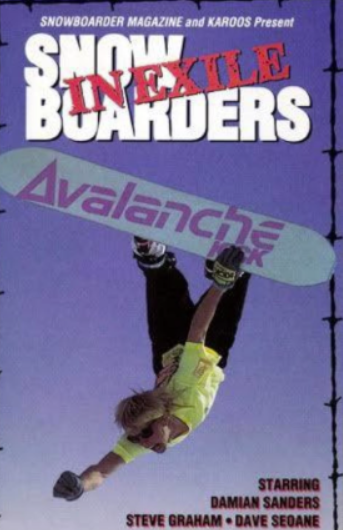
I also looked at professional snowboarders. Watching edits and competitions, such as the movie Snowboarders in Exile, I noticed that pros also leaned into baggy pants and bold designs. It wasn’t just about function; it was about image. In snowboarding, your outfit is part of your identity. You could tell a lot about someone’s style of riding just by how their pants fit or what patterns they chose. For example, the rider in the cover of Snowboarders in Exile wears baggy black pants and has a very laid-back, stunt affixed style.
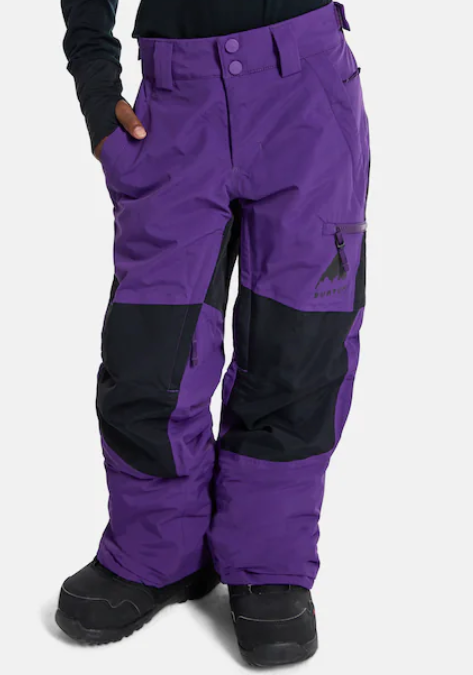
Another source of inspiration came from looking at actual snowboarding brands. Burton, Volcom, and The North Face all design technical snow pants that hold up to the weather. They gave me an idea of things like waterproof fabric, reinforced cuffs, and articulated knees. I wasn’t going to achieve their level of detail or waterproofing, but it showed me what “real” snow pants include.
Another big influence was 90s style such as that seen in Figure 3. In the 1990s, pants were extra baggy and often came in bright colors or loud patterns. Companies like Sessions and Oakley leaned hard into neon, blocky designs, and pants were almost comically oversized compared to today. That look became a defining part of snowboarding’s identity at the time. The style was rebellious, expressive, and different from skiing’s more serious, technical image. I liked the attitude behind that style. Even though my pants weren’t neon, I wanted to pull in some of that oversized 90s energy and freedom of movement.
Finally, I pulled inspiration from DIY makers online. On sewing forums like Reddit’s r/Sewing and places like Backcountry Talk, I found posts from people who had made their own ski or snowboard pants. Seeing those projects made me feel like I could do it too. Their results weren’t perfect, but the imperfections actually added character. That matched how I wanted my pants to feel, not mass-produced, but individual.
So, when I put all that together, my friends’ baggy camo pants, pro riders’ style, snowboarding brand designs, streetwear, and DIY projects, I ended up with a clear picture of what I wanted: pants that were big, camo, and very clearly mine.
Specifications
I kept my specs simple but clear so I wouldn’t get lost:
Fit: Oversized with wide legs
Length: Extra cuff length to drape over boots
Pockets: Two large back pockets
Fabric: Nylon or polyester outer shell (for water resistance)
Seams: Reinforced at stress points
Style: Ca
Sketches and Design Plans
I started with sketches. My first drawings were super rough showcasing just wide legs and big pockets. They were mostly about getting the overall design down.
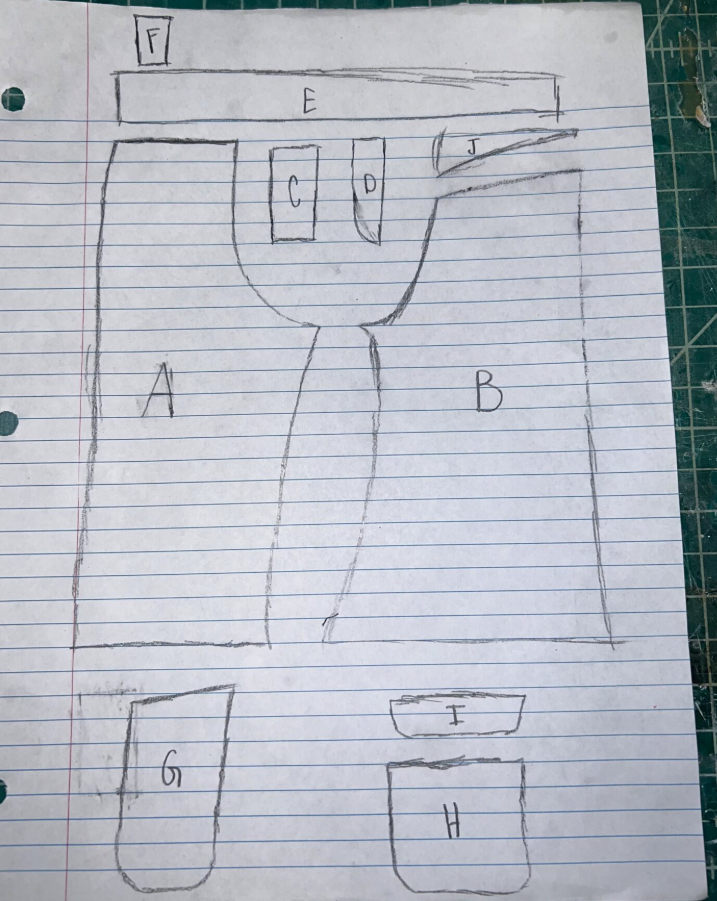
The second round of sketches added more detail. I thought about how to break up the pants with panels and seams, how large the waist would be compared to the legs.
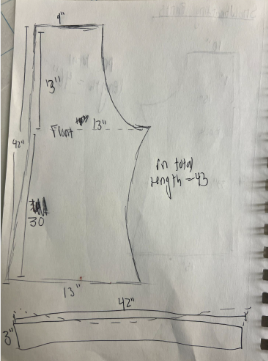
After pulling together all my inspirations, sketches, and specs, my final design came down to something simple but true to what I wanted: big, baggy camo snowboarding pants with wide legs and extra-long cuffs to cover my boots. I planned for two big back pockets, used nylon fabric so they’d hold up to snow and water, and made sure to reinforce the seams where they’d get the most wear. The baggy fit captures that 90s vibe I love, and the camo ties back to what I’ve seen my friends rocking on the mountain.
By the time I finished my sketches and measurements, I felt ready to move from paper to fabric without second-guessing myself. This project wasn’t about making something super technical like Burton gear — it was about making something that’s bold, functional, and totally mine.
Citations
Figure 2 – Snowboarder (Zeb Powell’s Extra-Long Snowboard is Now Available to the Public)
Figure 3 – Snowboarders in Exile, Jerry Dungan
Figure 4 – Burton (Kids’ Burton Skylar Pants | Youth Outerwear | Burton.com Winter 2026 US)
Figure 5 – GQ (Why Snowboarders of the ’80s and ’90s Are Eternal Style Legends | GQ)
