Memphis Design Lamp
In 1980, Ettore Sottsass pulled together a collective in Milan and built an aesthetic out of everything restrained, tasteful design told you not to do. It incorporates neon colors, clashing pastels, zigzag lines, geometric shapes stacked on top of each other. The pieces were called “speaking furniture,” the idea being that objects should carry metaphor and allegory, not just function.
The group broke up in 1987. Critics were not wrong that a lot of the furniture was basically unwearable to live with. But the movement left behind an identifiable aesthetic that keeps showing up in contemporary design whether people realize it or not.
Initial Ideas
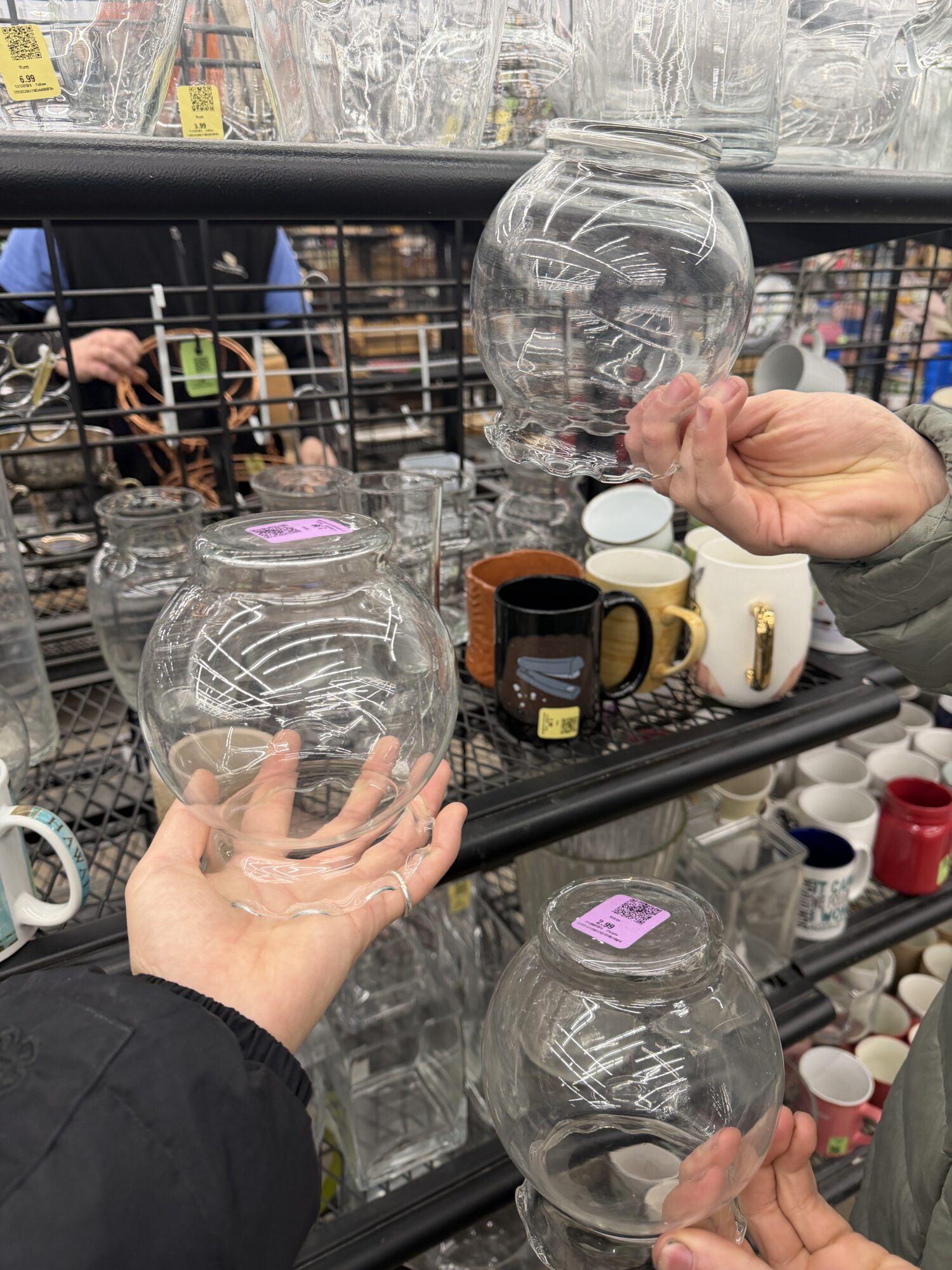
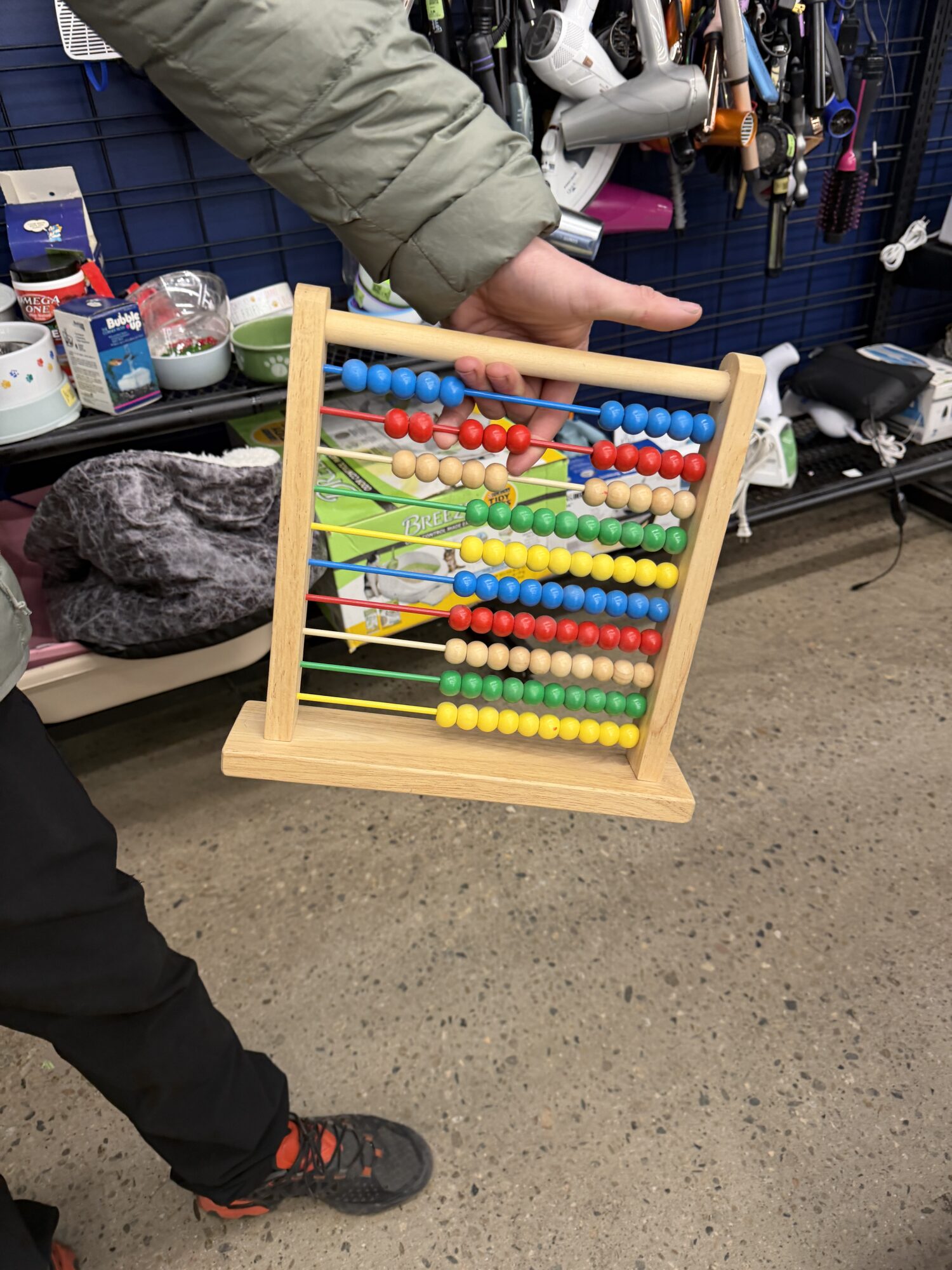
I started with 2 thrifted objects: a set of small glass vases with a ruffled opening and colorful abacus The vases flipped upside down looked like lampshades, the wavy rim pointed downward, which gave them a lot more visual movement than right-side up. I planned to color them using a Mod Podge and food coloring staining method. The abacus, with its rows of bright round beads, it already looked like it came from a Memphis catalog. For the base, I wanted bent metal rods, squiggly and irregular, pulled from reference images of the movement’s furniture.
Building
The steel rods I originally had were too short. I switched to a large coil instead, which meant flattening it first, something I had never done before. A friend helped. We hammered the coil into a straight rod, then bent it around a circular piece of scrap metal to form the ring that would sit inside the glass and hold the light puck in place.
Getting the ring to fit the glass took a lot of back and forth. Too tight and the glass cracked. I made it slightly larger, slightly smaller, several times. The glass started cracking anyway. By the last attempt I was working with a piece that had already started to go. The squiggly stem came after, bending the rod back and forth with tongs until the curves looked right.
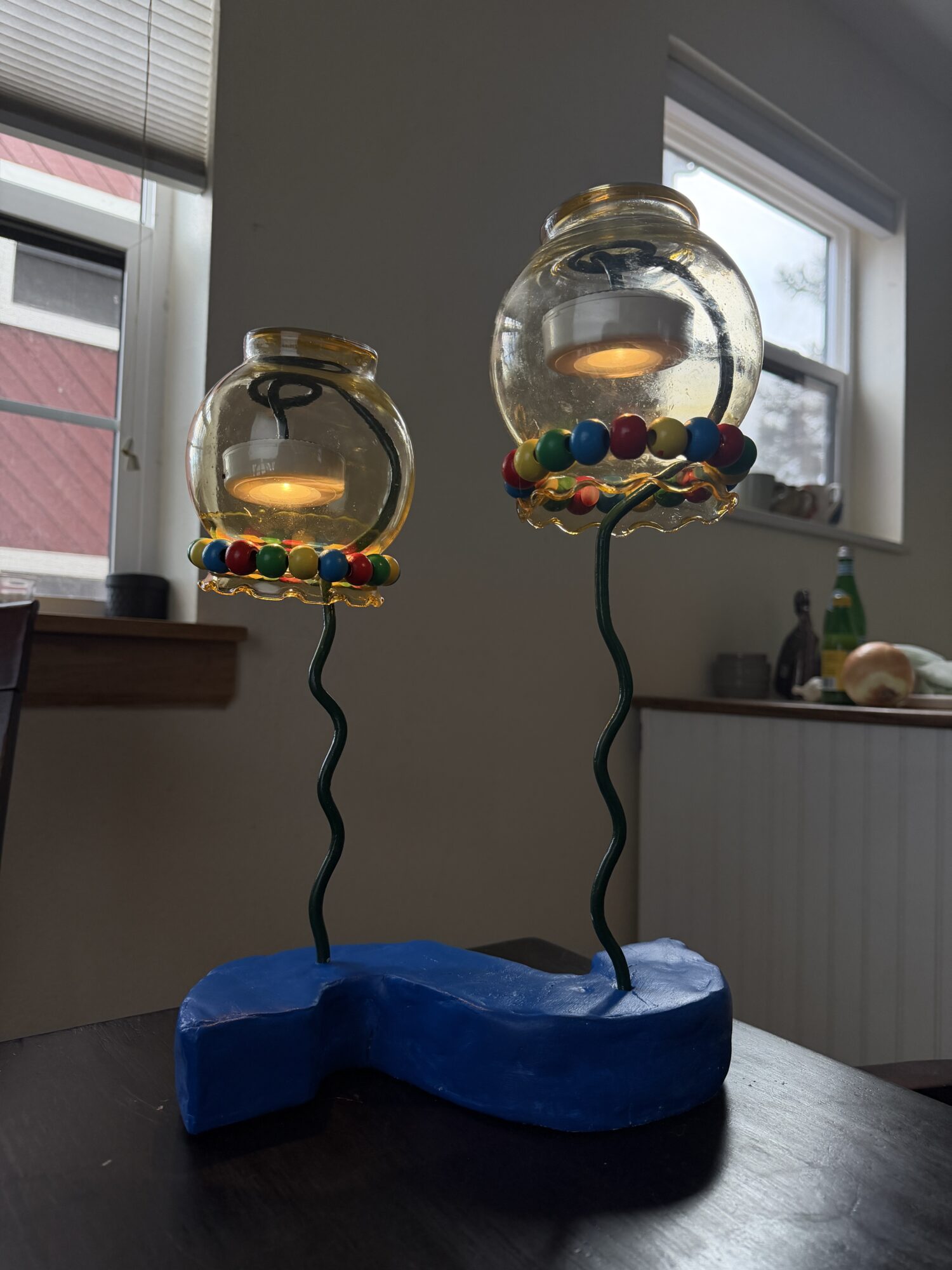
The dyeing took three full rounds. Each time I adjusted the ratio of Mod Podge to food coloring until the tint was even and stayed put. I then glued the abacus beads around the base of the shade.
Final Lamp
Stem rods got spray painted green. I modeled adapters in CAD for the light pucks (they needed to recharge, so they had to detach) and designed a curved base form slightly undersized so clay could go over it. The air dry clay cracked. Sanding brought it back to something workable, and the texture it left behind wasn’t bad, a little rough, clearly handmade. Blue acrylic paint finished the base off.
https://api.unrulr.com/public/posts/garnish-disburse-unfixed/share