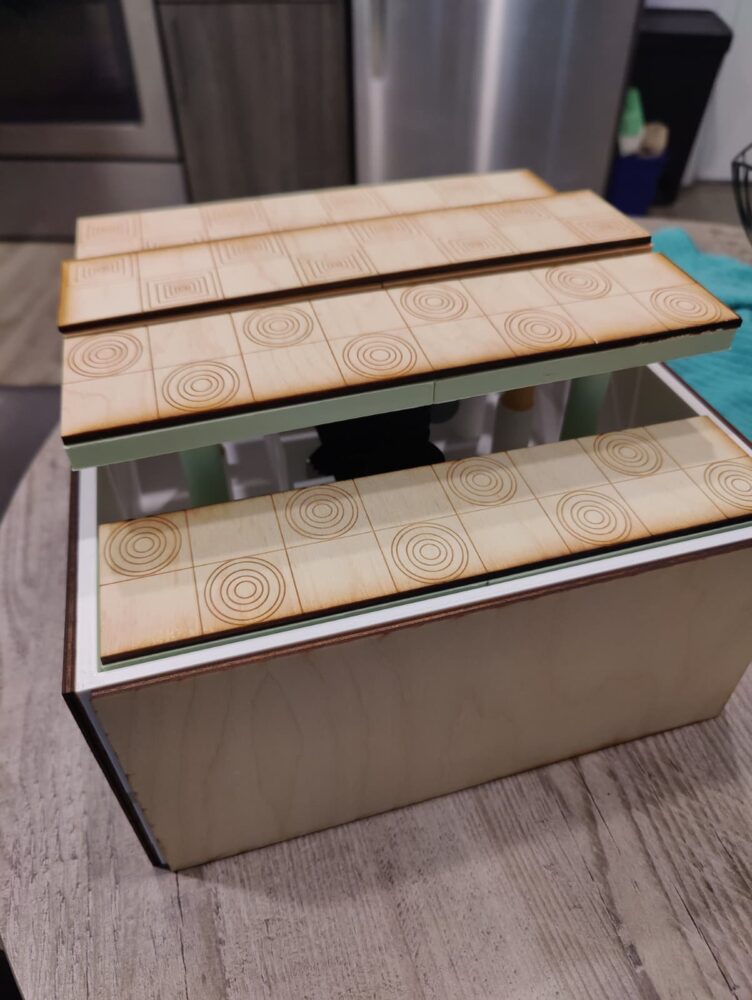
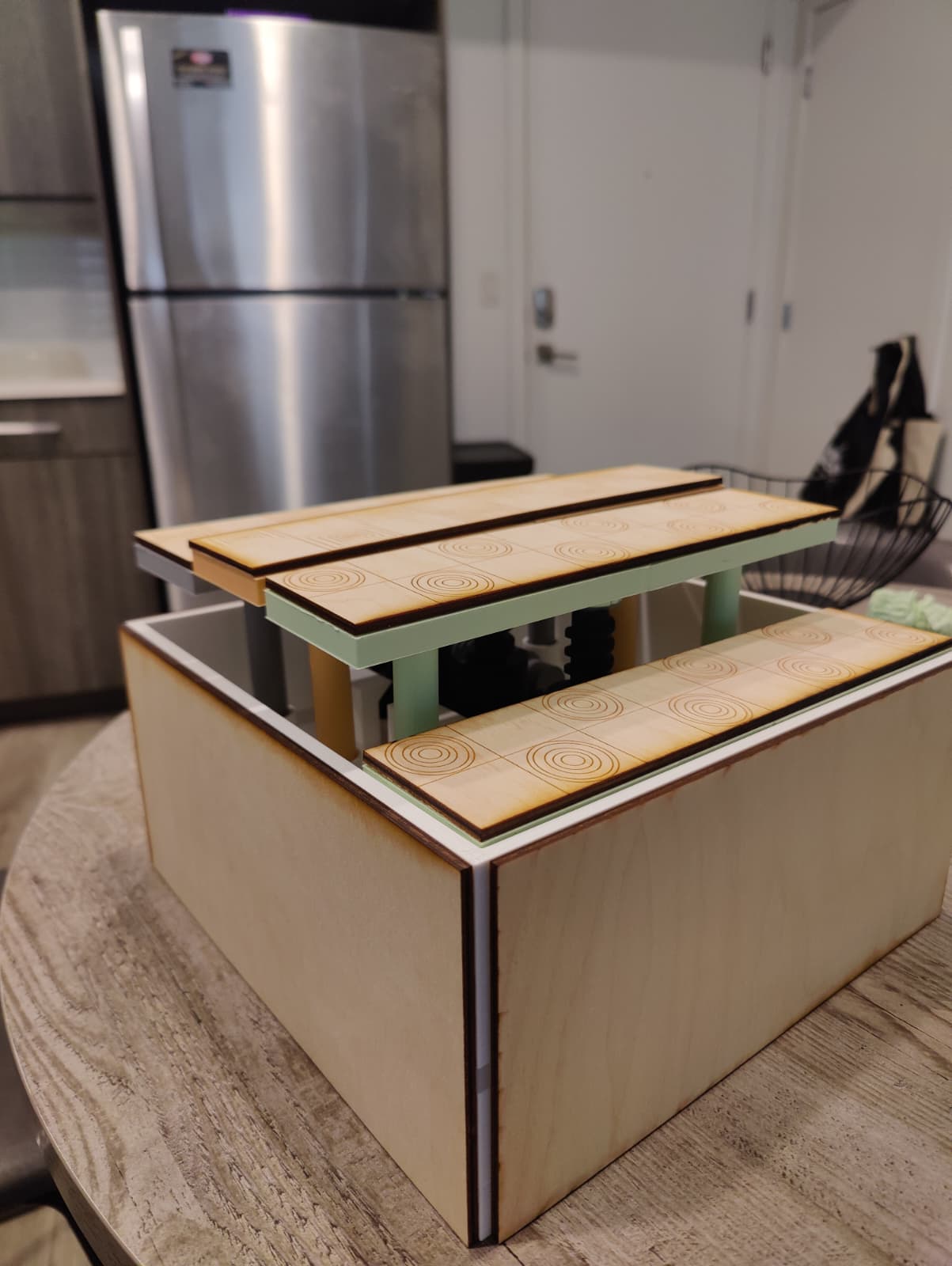
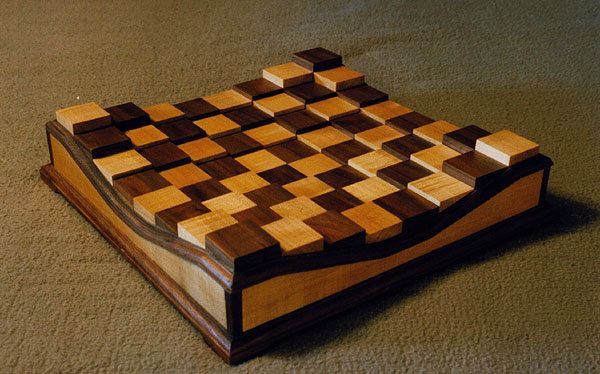
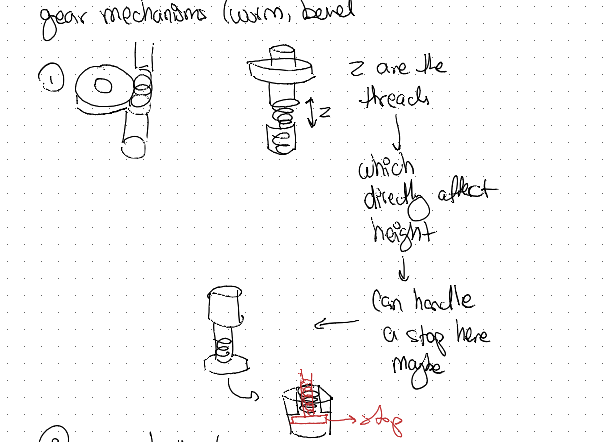
After deeply considering the budget, resource and time constraints, it appears more ideal for me to pivot my final project idea from a Stirling engine cup coaster (which was my preliminary idea going int this) to a kinetic wood/3D printed tabletop sculpture, that pulsates with a handheld crank. I believe this is more in line with something I want to create, capitalizes on the content of the class AND is more reflective of a graduate student’s 40 hour commitment. A chunk of the visible components may be 3D printed as the main aim is to replicate the pulsation of waves on an ocean using discrete wood/plastic blocks. Special heed is paid to minimize the amount of 3D printed parts (to the best of my abilities).
The goal is to have one hand crank that raises individual rows of the chess board to varying height with the last platform raised to 2.4 inches from the base. This creates a stairwell look that emerges from the base, similar to the dissipation of waves across the ocean’s surface. The height values are based on a damping coefficient of 0.1. The 3D base and gear will be covered by a checkered laser cut chess board overlay with unique design features. The sides of the base will also have the same overlay of 1/8 wood.
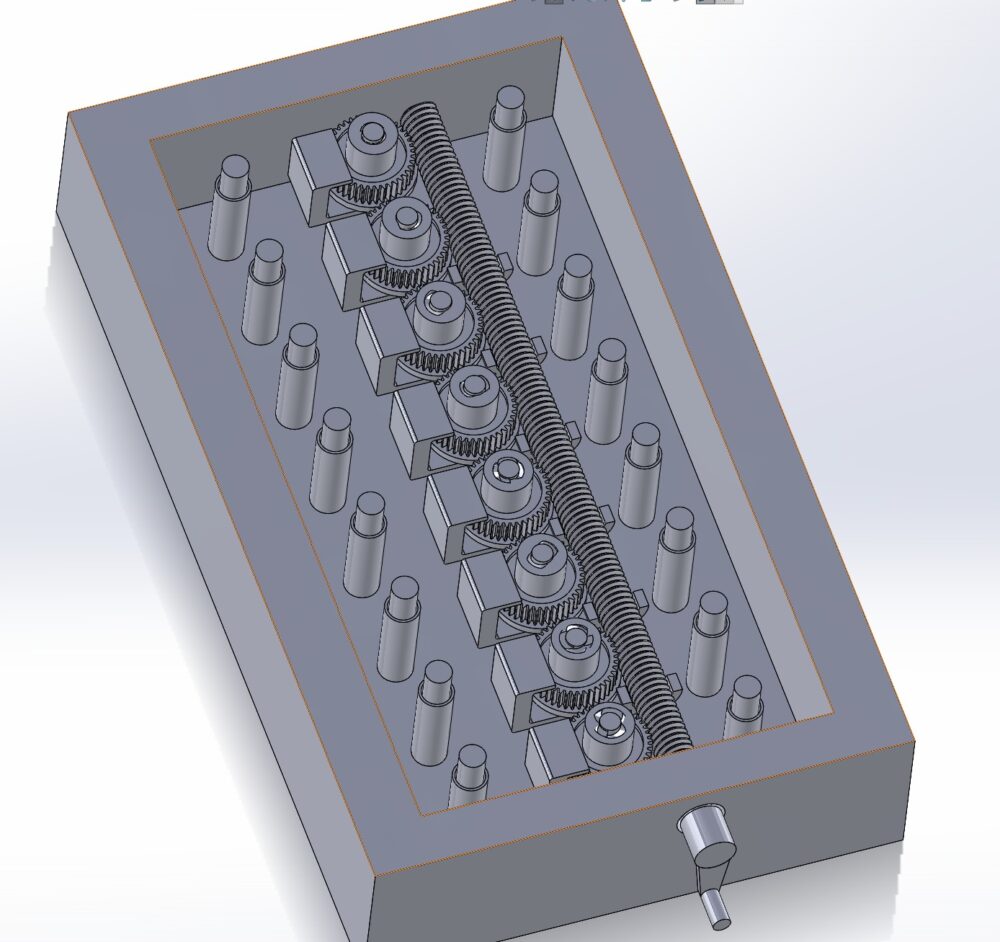
After my project change, I have spent an tiresome amount of time experimenting with gear modules, thread pitch, multistart threads for 8 different gearsets to follow the 8 different rows of chess pieces that are to be raised. The gear ratios, shear strength, overall torque and revolutions needed were considered to ensure the entire chess board (all 8 platforms) can be raised by hand within 40 revolutions, each raising at a different speed and level. As mentioned before, the different platforms will be raised to different heights but they will all be powered with one hand cranked worm gear, mimicing a traveling nut screw jack mechanism.
I genuinely cannot believe I have spent 10 hours just on the CAD model to mesh and generate thread displacement to match the overall required lift. Countless changes and accomodations for 3D printer uncertainty later, we have a print ready model to go. However, due to the last minute project change, I am approximately 50% of the way there, with manufacture and assembly remaining. I just got my certification to laser cut last week, so we are all set to go.
Project Complete: Presenting the “Chess Sucks Tabletop Project”
As a result of repeated chess losses to my elders during my youth, I have harbored a special resentment for the game. It is preached as some sort of ultra-smart game that only the gifted play, mirroring themes of life. From this distaste stems the above project. I wanted to create a project that would be frustrating for the end user to work with, thus getting my long deserved victory against the game.
The rear side of the project houses a hand crank that can be turned to both lower and raise the platforms that hold the chesspieces. However, the worm gears and traveling nut jack mechanisms within the housing is designed such that the hand crank simulataneously raises and lowers the platforms at different speeds and directions (very very slowly). This results in a chessboard that is always unleaveled and takes a minimum of 40 turns to observe any visible change (due to the gear ratios and pretty fine threads.
The steps included:
– Design a 8 traveling nut screw jack mechanism where each platform rasies more per 40 turns that the previous one. Use ACME 30 degree trapezoidal profiles to achieve this. Design the worm gears to mesh too, experiementing with FDM orientations and tolerances to ensure a snug fit
– Design the platforms to translate upwards only and to not rotate, also paying heed to dimensions of the chess pieces
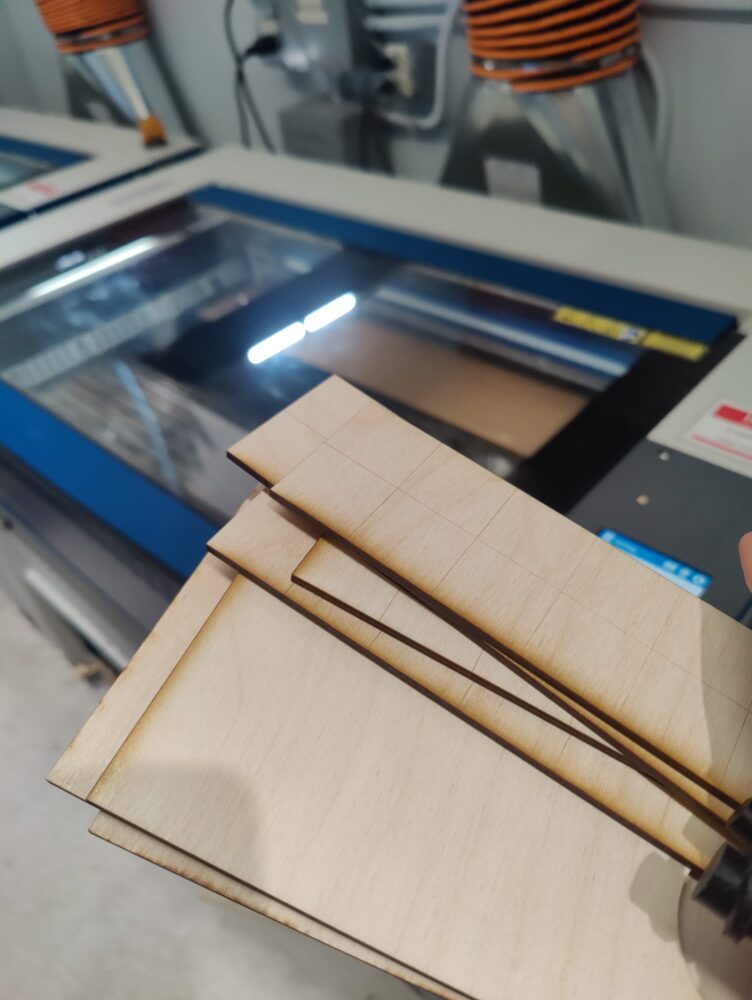
– Get certified to use the laser machines and laser cut 4 slabs for the outercasing and 4 slabs for the chess pieces, with designs for the chess platforms above it
All in all, the end product was frustrating enough for me to not want to use it again, so technically, mission accomplished 🙂