
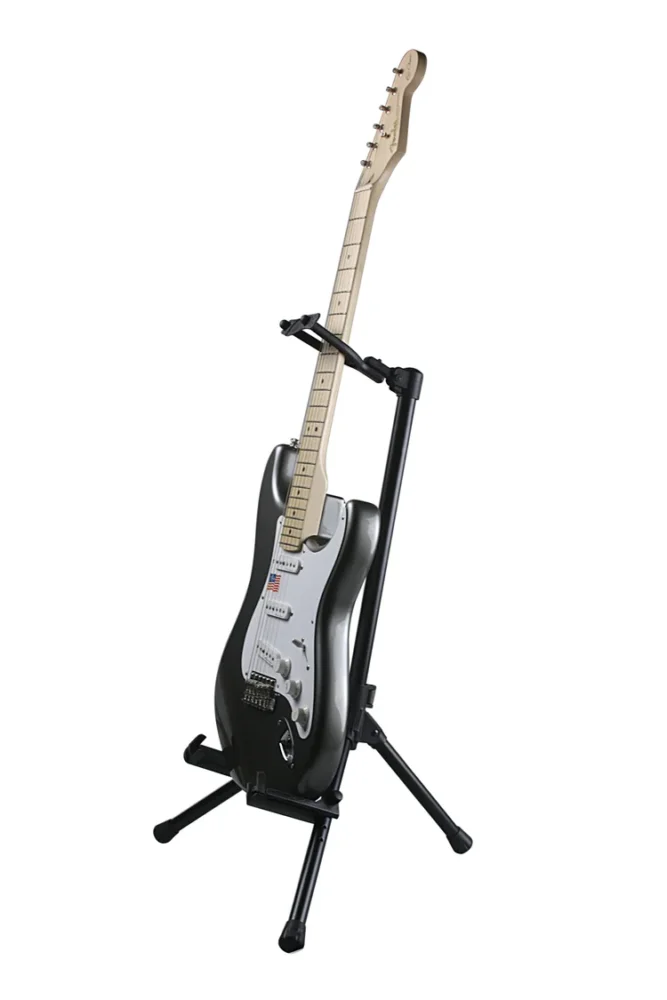
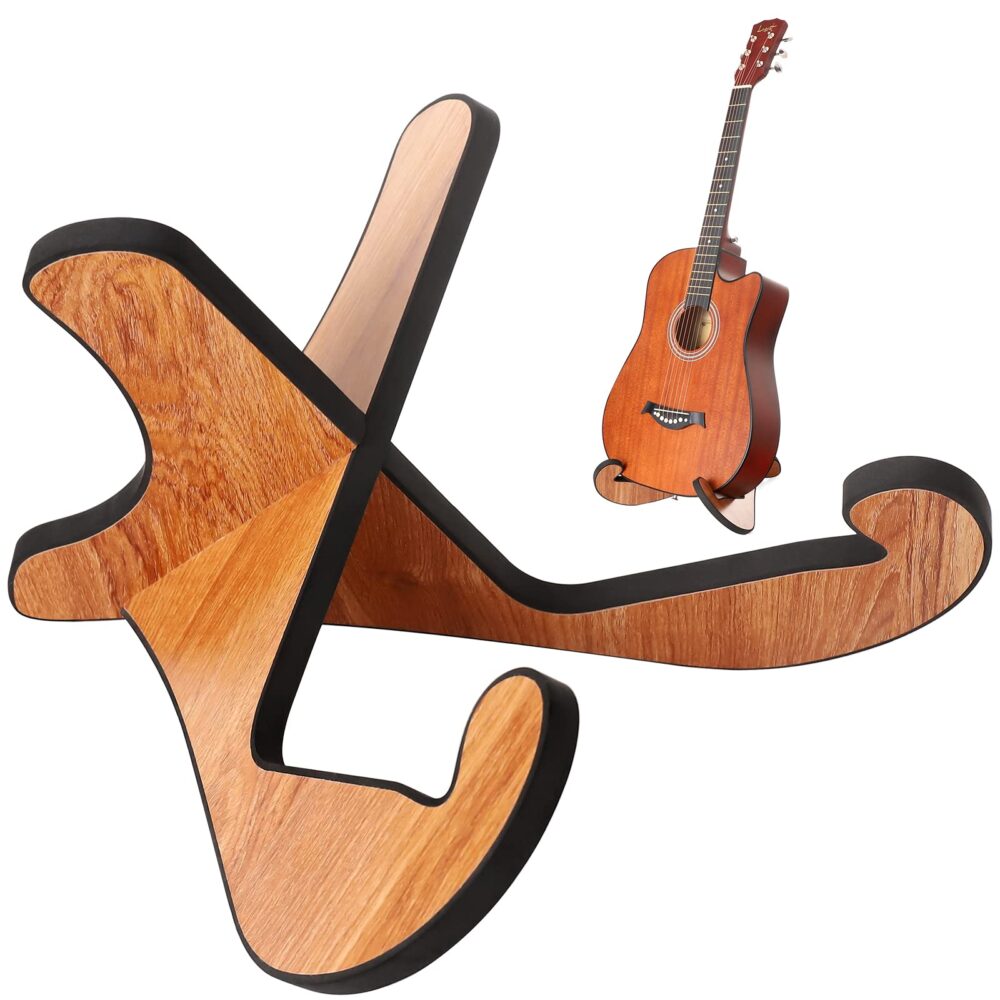
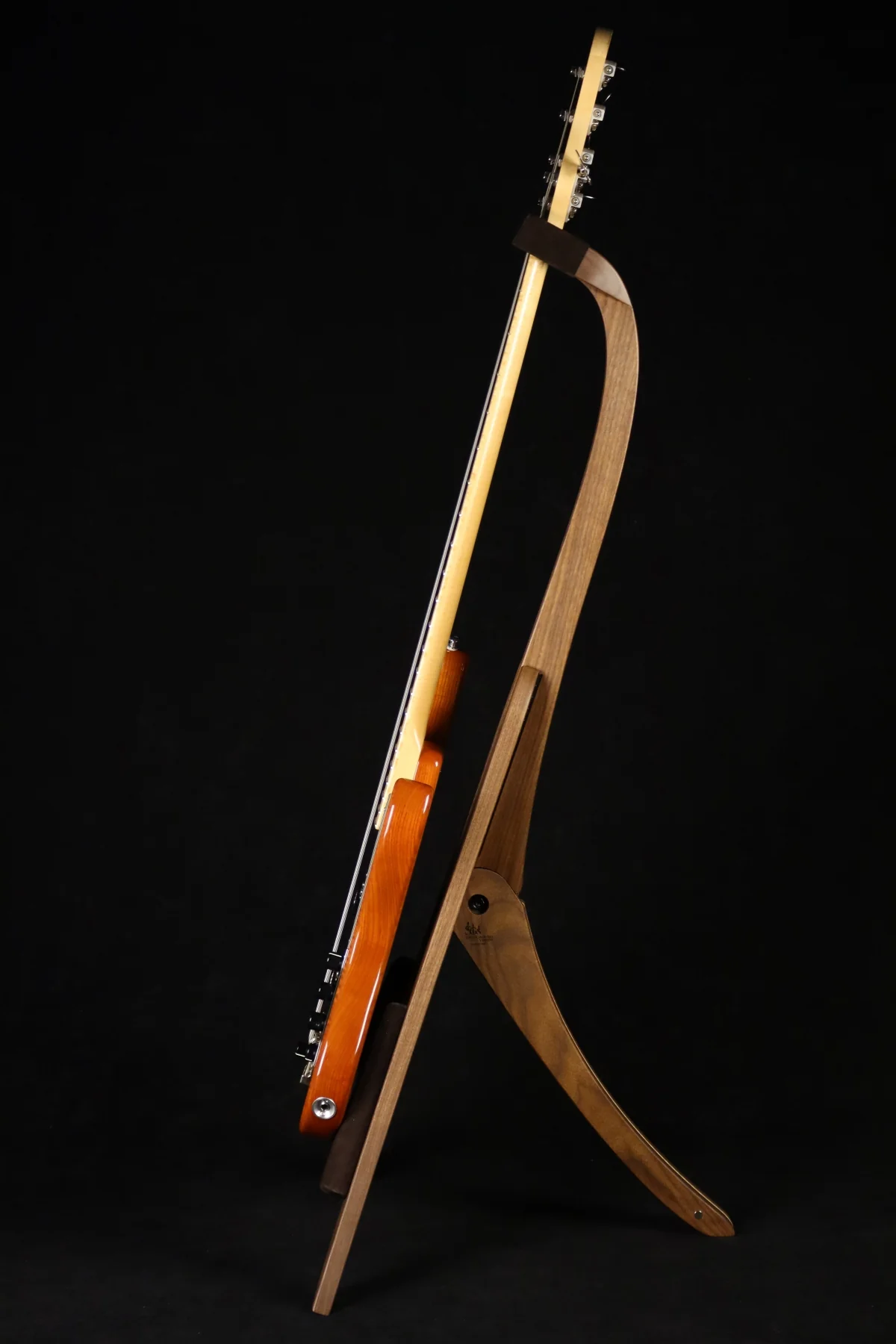
I’m tired of leaning my guitar against the wall and worrying about it falling over, but most guitar stands look like the image to the left which I find very ugly. Some stands can be less of an eyesore with more natural materials and simpler more minimalistic designs as seen in the center image. These usually aren’t great stands and aren’t very functional either. Some stands, like the one on the right solve both problems without becoming terribly complex.
Project Description
This is my final aesthetics project, for which I chose to build a guitar stand because so many guitar stands are plain and ugly. I wanted this to have craftsmanship, natural materials, and a timeless hand made look. This desire drew me towards the Arts and Crafts movement of the 19th century. It was a response of the British people to the growing ugliness of the industrial revolution. Leaders of the movement described industrialism as dehumanizing and took influence from other aesthetics like art nouveau, another of my favorites.
This project aimed to match the arts and crafts aesthetic through its unaltered material finishes, lack of fasteners, and honest joinery. The combination of these traits and patient craftsmanship delivered a final product I believe looks good and functions well.
Project Post
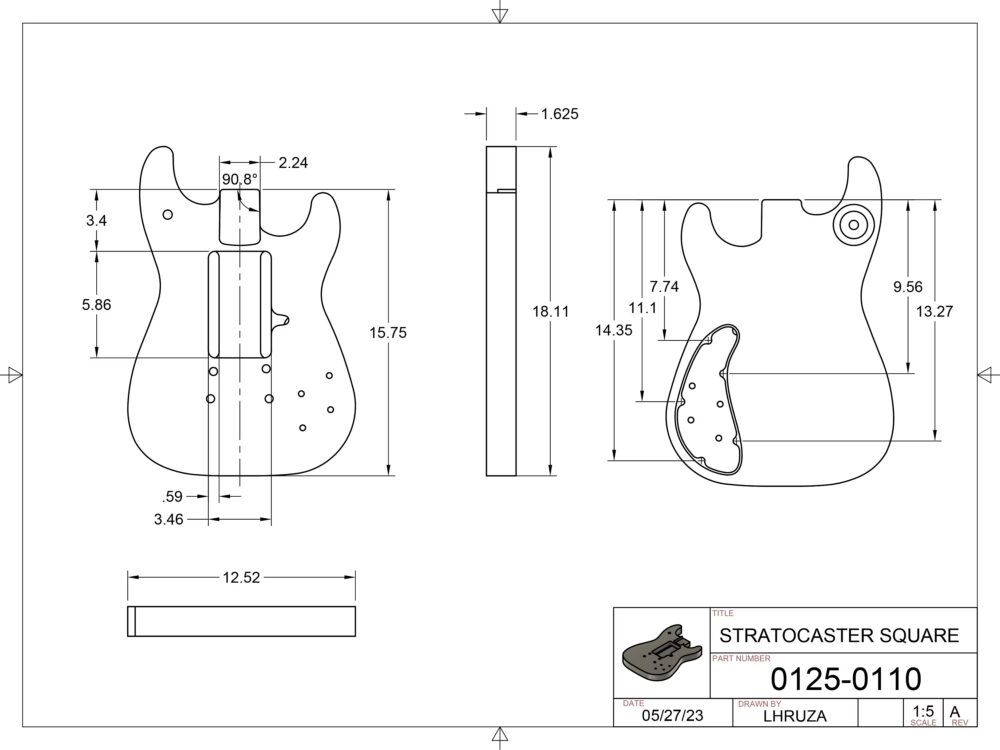
First I used an engineering drawing of a guitar with the same body as mine to get the general dimensions for my stand. This ensured that everything would be easy to dimension later in CAD.
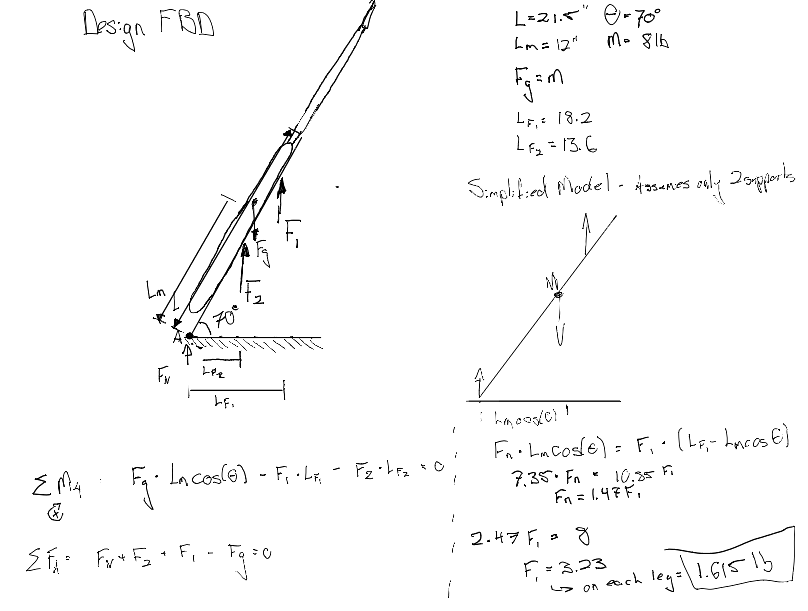
To ensure that I build substantial supports I drew a free body diagram with an overestimated weight of the guitar to figure out how much weight the stand would need to support which ended up being about 3.5 lbs in total.
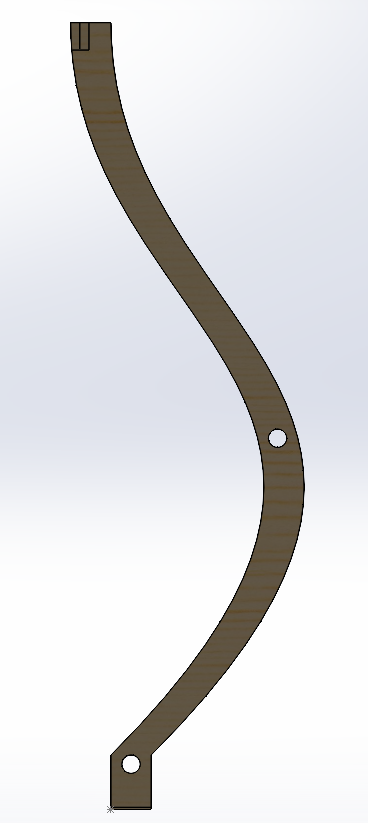
I used this angle and its mirrored replica to print out the template for my stand’s arms. This made the process of cutting with the jigsaw much simpler and easily repeatable, which will become important later.
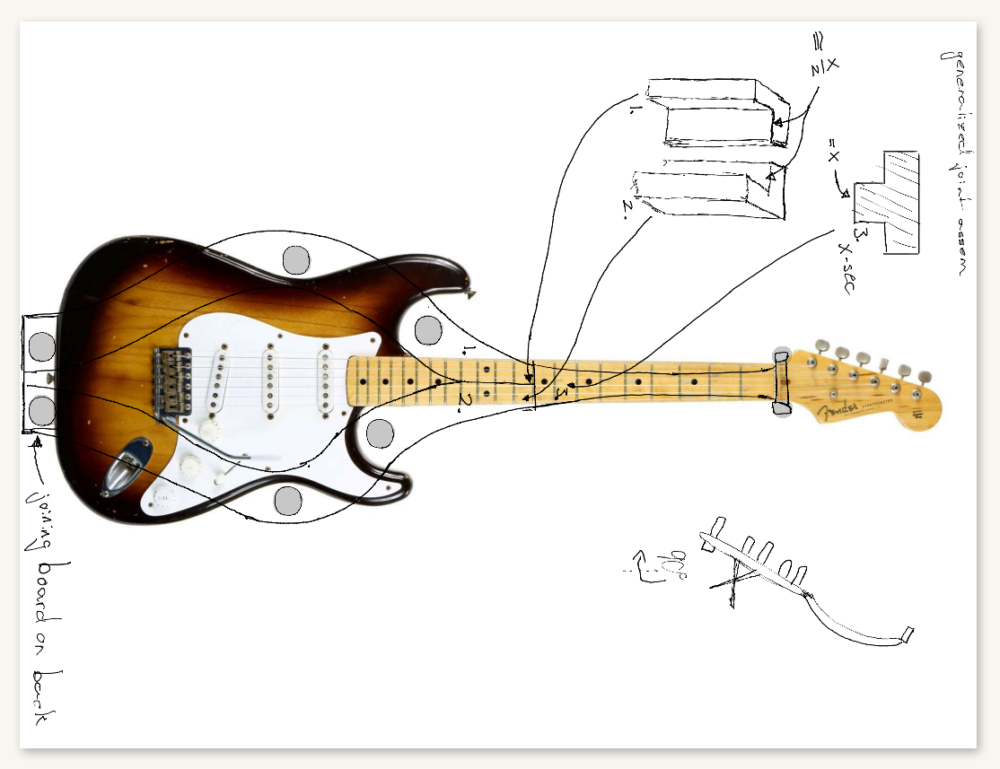
Using those general dimensions I began a sketch of what the stand might look like. I chose to essentially contour opposite the guitar; where the guitar is wide the stand is narrow and where the guitar narrows the stand is wide.
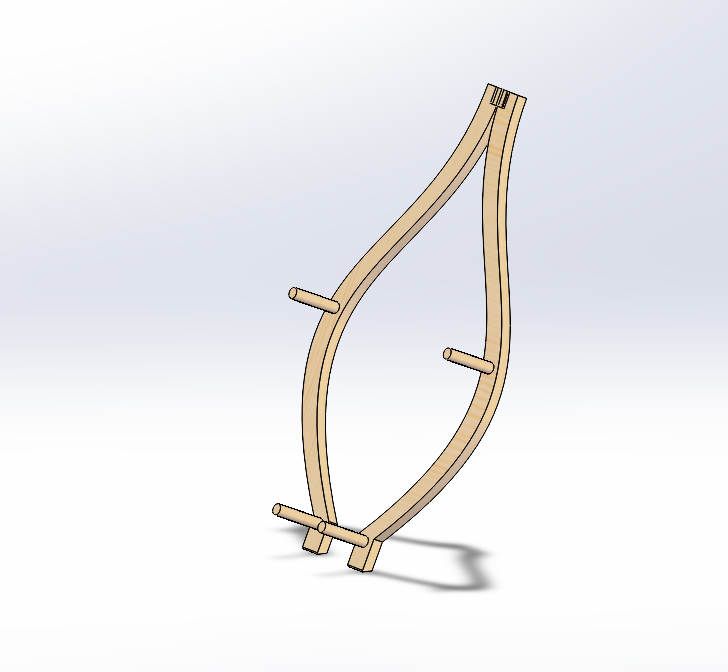
Now that I had decided on a design and determined that it was viable I began to model the stand arms in SolidWorks. This will allow me to turn this into a drawing then a stencil to cut with.
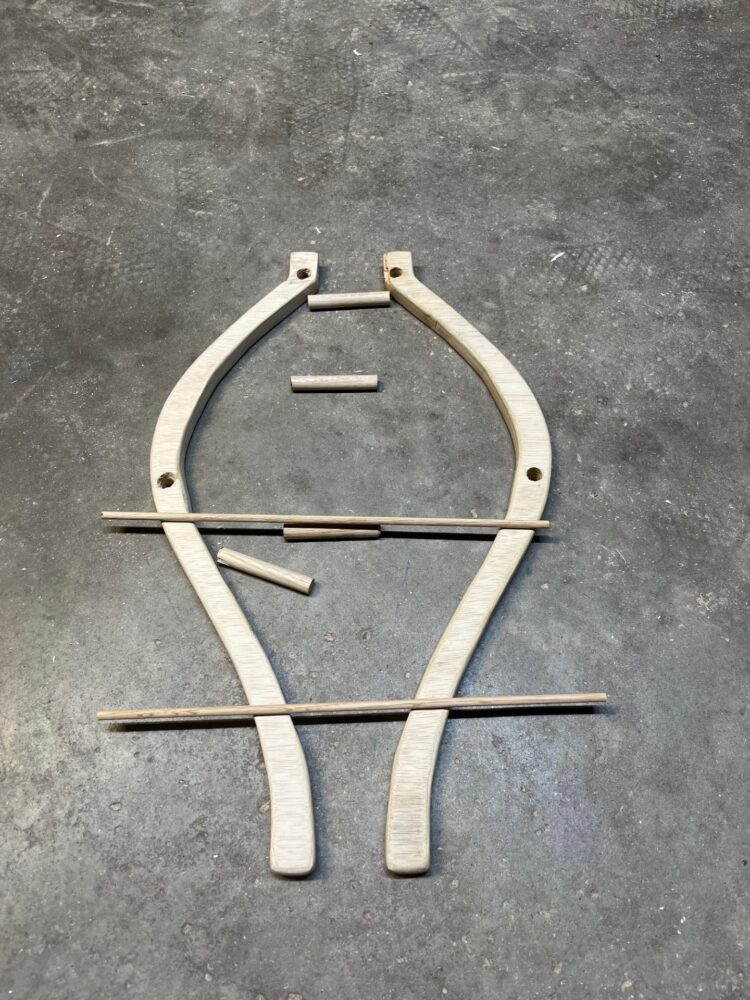
Using my template I was able to cut two identical arms for the stand and was able to add the main holes for the support pegs. Unfortunately, as I began working with the plywood I realized the initial vertical dowel supports that I wanted would not be structurally sound. So I used the template I had made once more and created a third identical arm.
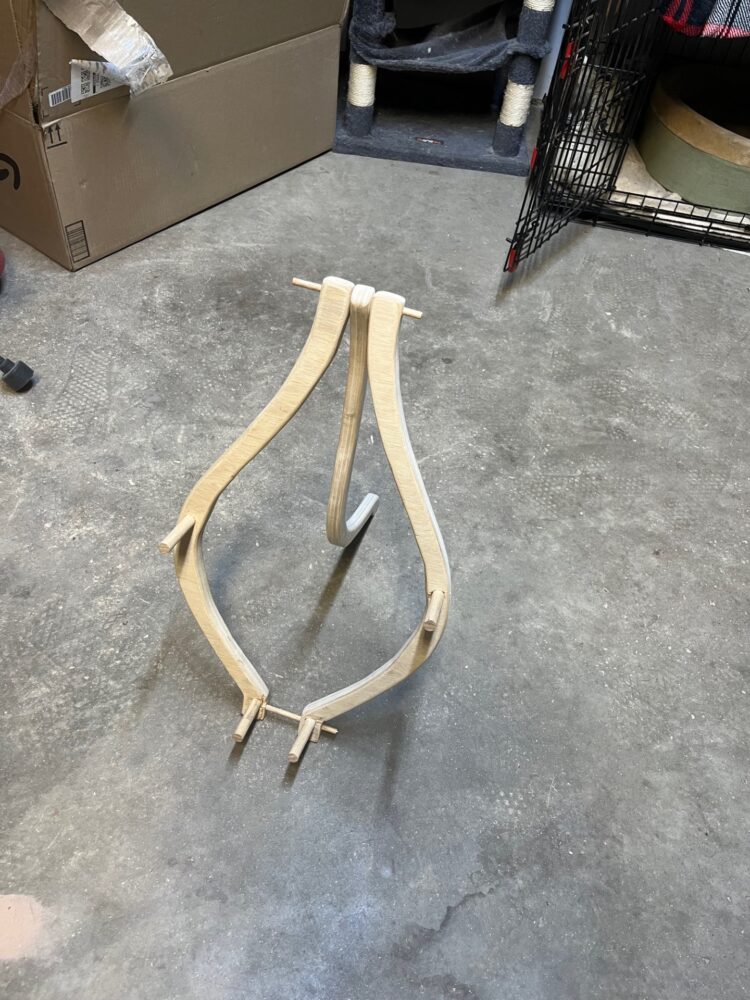
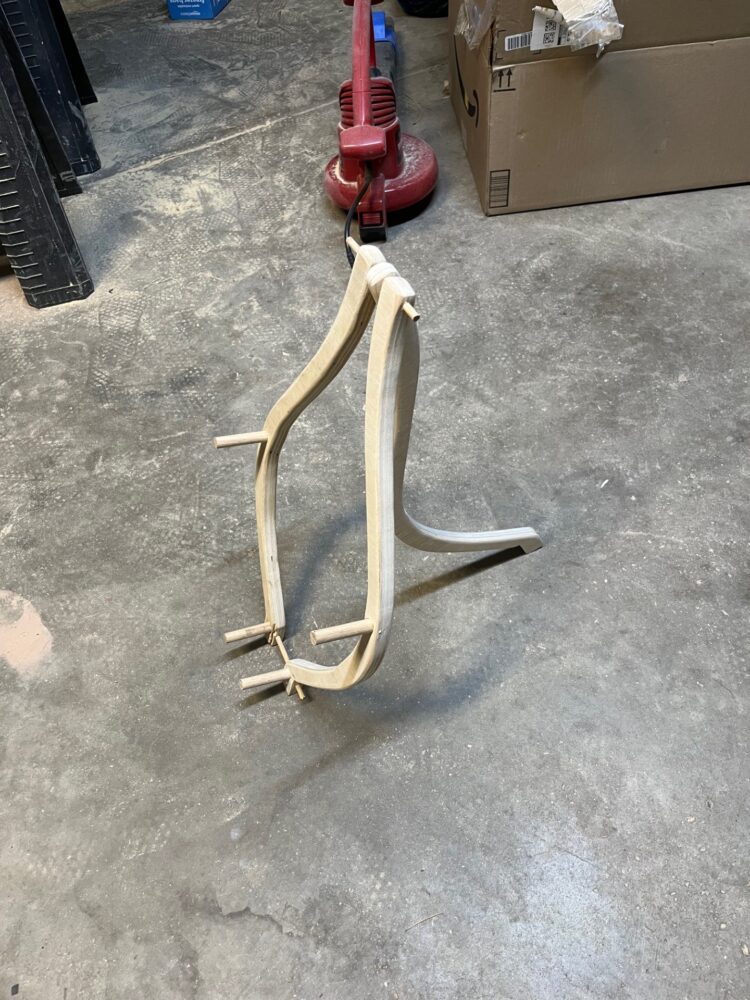
This addition of a third arm as the support not only matches the rest of the curves of the piece but allows for an adjustment of angle as well. Most of the weight of the guitar is transmitted down onto the lowest pegs placing very little pressure on the third arm which is mostly for balance.
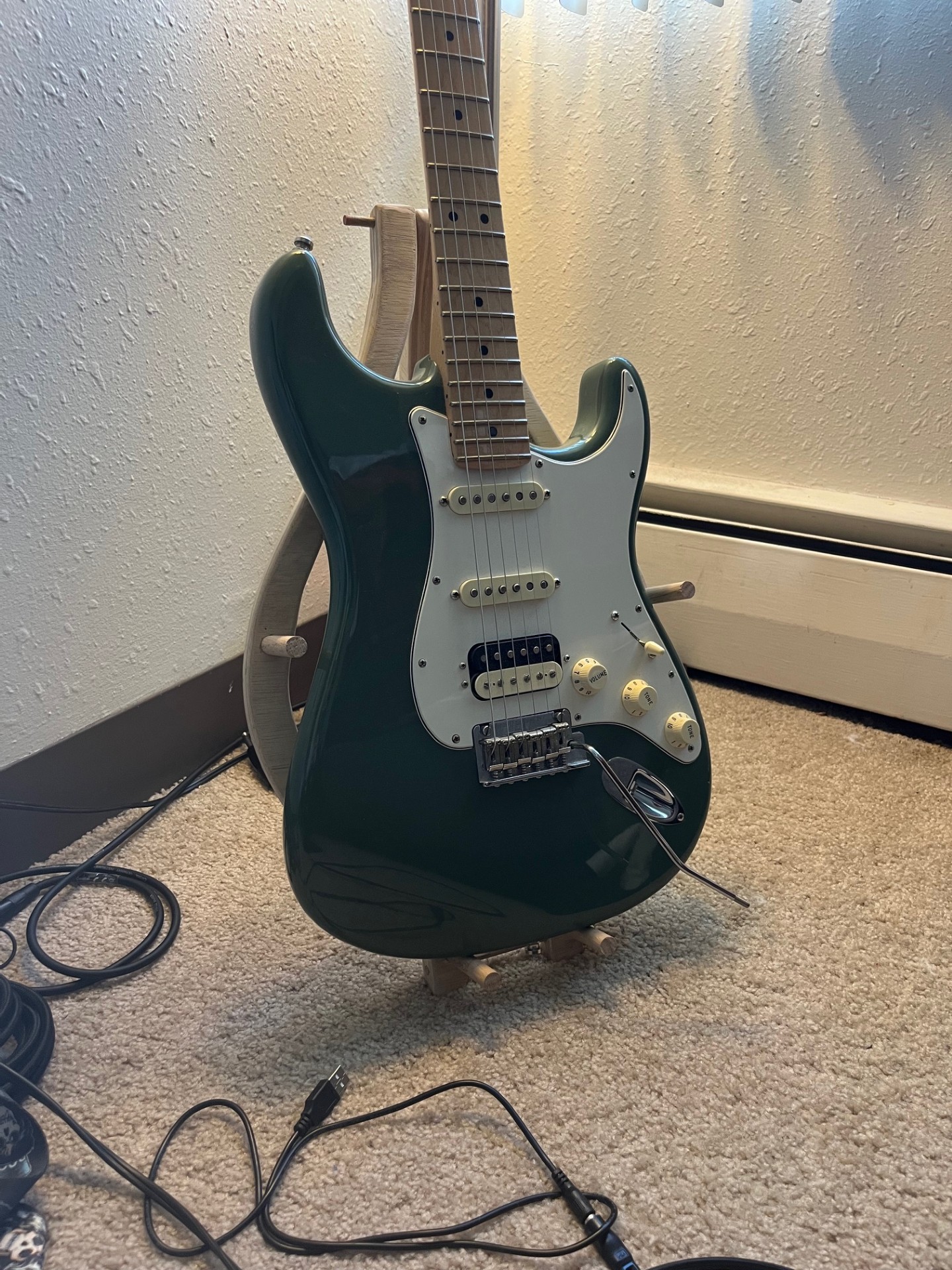
A very small amount of wood glue, zero fasteners, and many many hours of sanding have turned these pieces of plywood and dowel into a piece of craftsmanship that I would deem worthy of representing the 19th century arts and crafts movement.
